


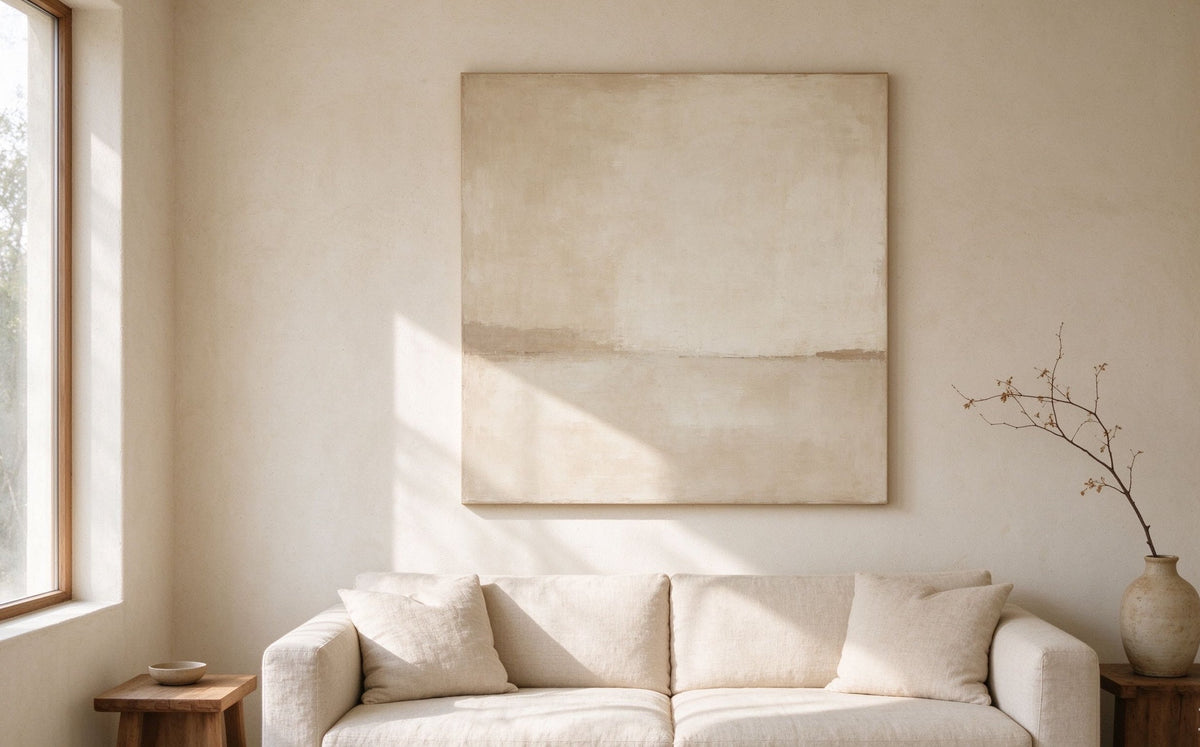
Some rooms feel calm the moment you walk in. The walls are warm, the light is soft, and nothing shouts for attention. That feeling — quiet, unhurried, honest — is exactly what Japandi and wabi-sabi design try to create. And the right wall art is often what finishes the mood.
In this guide, we'll look at what Japandi and wabi-sabi really mean, and show you how to choose minimalist neutral paintings that bring that calm to your home.
What Is Japandi?
Japandi blends Japanese minimalism with Scandinavian comfort. From Japan it takes restraint, natural materials, and respect for craftsmanship; from Scandinavia it takes warmth, light, and softness. The result is a style that is sparse but never cold, functional but never bare.
What Is Wabi-Sabi?
Wabi-sabi is the Japanese philosophy of finding beauty in imperfection and transience. Nothing is finished, nothing is permanent, and nothing is perfect — and that is precisely what makes things beautiful. In practice, it means favoring asymmetry, natural textures, hand-made character, and quiet colors over polish and symmetry.
The Japandi & Wabi-Sabi Palette: Warm, Never Stark
The palette is the fastest way to recognize — or ruin — the style. Japandi and wabi-sabi rooms live in warm neutrals: oatmeal, ecru, warm taupe, sand, soft clay, and muted stone, with deep umber or charcoal used sparingly for grounding.
The key is warmth. Stark, sterile white reads cold and clinical; a warm off-white or greige keeps the room soft. Your art should sit inside this same family — not against it. If you're styling with earthy, sand, or oatmeal tones, explore our beige wall art palette to see how subtle variations create depth without visual noise.

How to Choose Minimalist Neutral Paintings for Your Home
1. Match the Warmth, Not the Exact Color
Choose paintings whose undertones belong to the same warm-neutral family as your walls and sofa — but don't try to match colors exactly. The most elegant spaces pair slightly different warm neutrals that quietly harmonize.
2. Keep the Subject Simple
Abstract washes, a softly suggested landscape, a single minimal botanical, or texture-led compositions all suit the style. What matters is restraint: one clear idea, generous negative space, nothing busy.
3. Look for Natural Texture
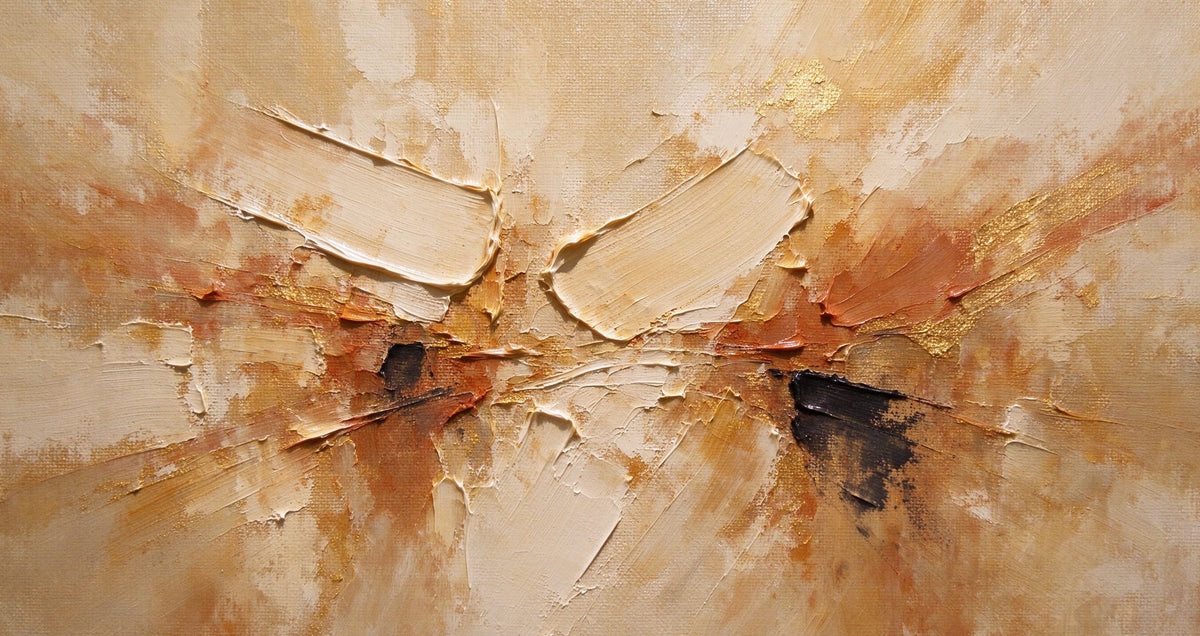
Linen canvas, soft impasto, a matte finish — texture is how a neutral painting stays interesting without using color. A hand-painted piece with visible brushwork belongs here far more than a glossy print. Discover tactile pieces in our textured wall art collection to add dimension to neutral walls.
4. Let One Piece Breathe
Japandi rooms rarely need a full gallery wall. One statement painting, given real breathing room on the wall, is more powerful than several pieces competing for attention.
5. Frame It Simply
Natural wood, light and unadorned — or no frame at all. Heavy, ornate, or black frames break the calm. If in doubt, let the painting stand alone.
What to Avoid
- Cold, sterile whites that clash with warm neutrals.
- Busy, high-contrast patterns that bring visual noise.
- Glossy reproductions — printed canvas with a shiny finish fights the natural-texture mood.
- Matchy-matchy sets — a piece that exactly repeats your sofa color feels calculated, not calm.
Frequently Asked Questions
What colors work best for Japandi wall art?
Warm neutrals — oatmeal, ecru, taupe, sand, soft clay — with muted earthy accents. Avoid stark white and high-saturation colors.
Is wabi-sabi art abstract?
Not necessarily. Wabi-sabi favors simplicity and natural texture — soft abstracts, minimal landscapes, and botanical pieces all fit. The shared trait is restraint, not a specific subject.
How much wall art should a Japandi room have?
Less is more: one well-chosen statement piece with generous negative space around it usually works better than a crowded gallery wall.
Can I get a neutral painting in a custom size or tone?
Yes. Welstell paints custom pieces to your wall size and palette — see our custom oil paintings page.
Make Room for Quiet
Japandi and wabi-sabi aren't about having less — they're about choosing better, and letting each thing breathe. The right painting, in the right warmth, with the right space around it, can be the calmest element in your home.
Browse Welstell's wabi-sabi wall art collection, explore neutral wall art, or commission a custom piece in the exact tone your room needs.
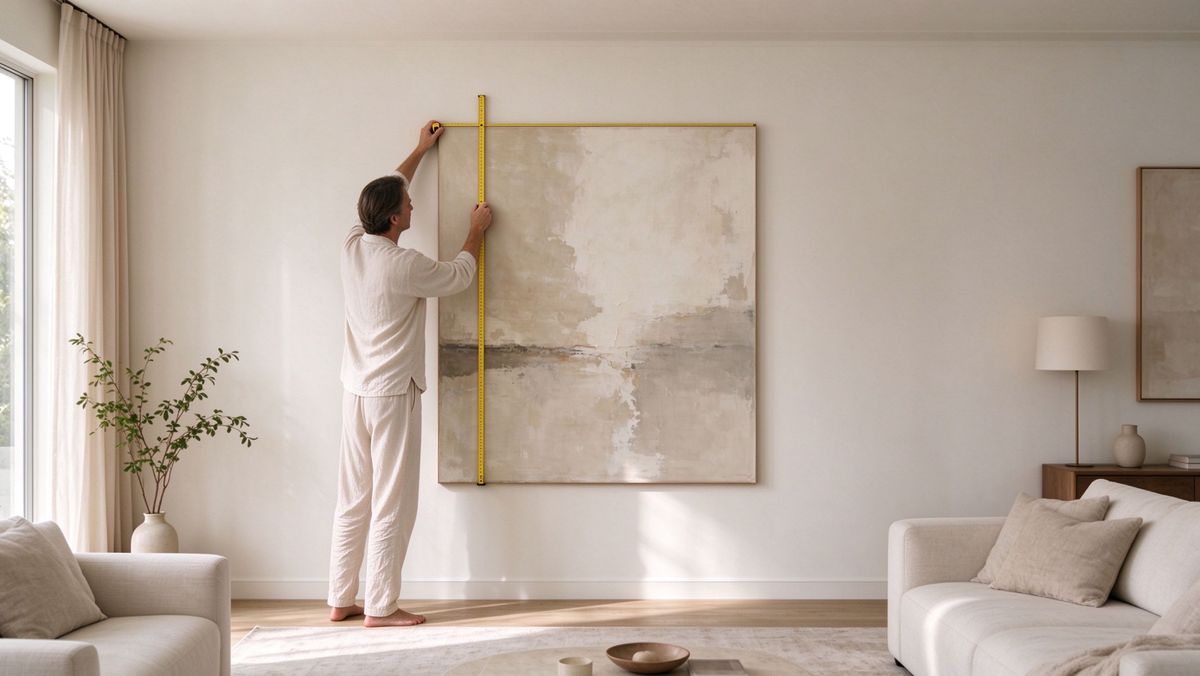
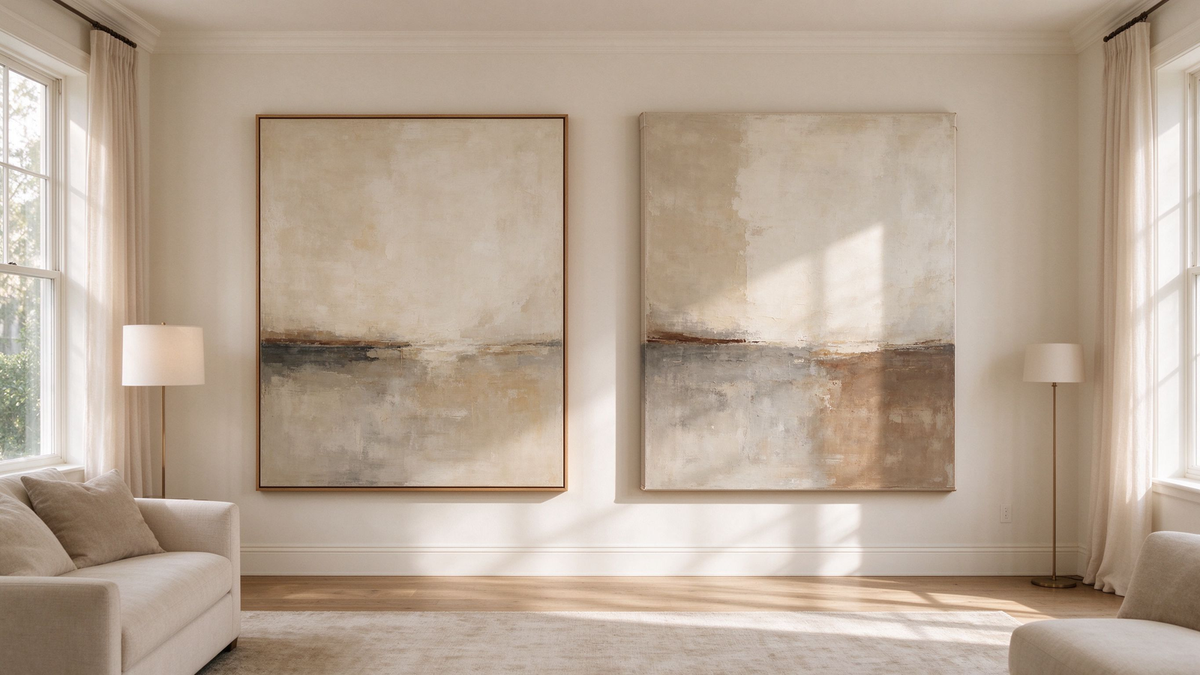
Share:
What is Impasto & Textured Canvas Art? Why 3D Art Is Dominating Modern Interior Design
Framed vs. Gallery Wrapped Canvas: Which Finishing Style Suits Your Home Best?